IEHP

By Phil Calhoun in conversation with Wayne Guzman
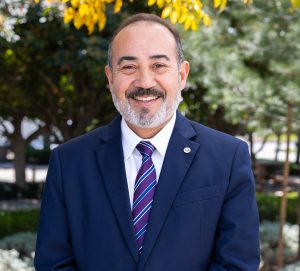
Wayne Guzman, SHRM-SCP, is director of sales and outreach at Inland Empire Health Plan (IEHP), where he leads efforts to expand broker relationships and support the plan’s growth in the Inland Empire. A licensed insurance professional since 1989, he brings nearly four decades of experience spanning brokerage, benefits, carrier representation, and health plan strategy.
This article is based on a recorded California Broker Magazine Professionals Spotlight conversation between Wayne Guzman and Phil Calhoun. The discussion focuses on IEHP’s broker strategy, Covered California presence, future Medicare ambitions, and the practical role agents can play in helping members use coverage effectively.
IEHP builds its next broker partnership chapter
For brokers serving Riverside and San Bernardino counties, Inland Empire Health Plan is becoming more than a familiar Medi-Cal name. IEHP is building commercial infrastructure, strengthening its broker channel, and laying the groundwork for an eventual Medicare Advantage Prescription Drug offering.
That approach is informed by the perspective of someone who has spent most of his professional life in the business. Guzman entered insurance shortly after graduating from Cal State Long Beach with a degree in business administration and finance. He became licensed in 1989, built a brokerage practice, and later transitioned deeply into health insurance, benefits, and carrier representation.
“I became the first broker ever affiliated with IEHP,” Guzman said. “We had no broker channel and I thought that was really cool. We were going to get to build a broker channel here.”
A mission-driven health plan
Guzman said IEHP’s mission, vision, and values drew him to the organization. The plan serves Riverside and San Bernardino counties, an area he describes as a large and rapidly evolving region with roughly 4.8 million residents.
IEHP’s central purpose is to “heal and inspire the human spirit,” Guzman said, while working to deliver optimal care and create healthier communities across the Inland Empire. That mission resonated with his background in community service and nonprofit involvement, as well as his experience helping clients navigate coverage decisions.
The plan began as a public entity health plan created by Riverside and San Bernardino counties to serve Medi-Cal beneficiaries. Today, Guzman said IEHP’s current focus is built around three offerings for Inland Empire residents. Those are Medi-Cal, a Dual Eligible Special Needs Plan, and the commercial IEHP Covered product.
For brokers, the public entity orientation matters. Guzman emphasized that IEHP is focused on long-term community investment and sustainable growth, not simply chasing enrollment volume.
“We never started IEHP Covered for the purpose of growing IEHP Covered,” he said. “It was born more of protecting and conserving and providing a pathway” for members who could lose Medi-Cal eligibility during redetermination.
Commercial coverage began with continuity
IEHP Covered emerged as the plan anticipated that a significant number of Medi-Cal members could face eligibility changes after pandemic era protections ended. Guzman said the organization was preparing for approximately 250,000 to 300,000 members to go through redetermination.
The strategic question was straightforward. How could members who no longer qualified for Medi-Cal remain connected to IEHP and preserve access to a plan and provider network they already knew?
That continuity objective drove the commercial launch. In Guzman’s view, it also positioned IEHP well for a changing California coverage market. He said the plan now has commercial infrastructure in place rather than having to build it reactively as market and legislative conditions shift.
Currently, almost all IEHP Covered business is written on exchange, Guzman said. Still, IEHP is evaluating the role its off-exchange offering could play for consumers who do not qualify for subsidies or for employer-based arrangements. He also identified potential future opportunities around ICHRA, small employer coverage, and Covered California SHOP.
That does not mean IEHP intends to rush into every adjacent market. Guzman’s recurring theme was controlled expansion that protects the member experience and supports brokers with dependable operational capabilities.
Network scale meets local investment
IEHP operates through a dual network model that includes direct physician contracts, IPA relationships, hospitals, and specialty providers. Guzman said the plan has nearly 10,000 provider partners, with more individual physician contracts than large IPA arrangements.
The broad network footprint is essential in a region extending from the low desert to the high desert, from Temecula through Riverside and San Bernardino County, and toward the Arizona and Nevada borders. The geographic scale creates a continuing need to expand access and strengthen provider capacity.
“We continue to invest into the Inland Empire and work together with our schools, our universities, those who help to bring new doctors and nurses,” Guzman said.
For brokers, that local investment story can be meaningful in conversations with clients who value provider access, community ties, and plan stability. It also reflects the operational realities of selling coverage in a region with significant growth, varied communities, and persistent provider access pressures.
Medicare growth requires patience
IEHP currently offers a D-SNP program, but brokers cannot yet sell it. Guzman was direct that the program remains closed because IEHP is building the systems, infrastructure, and operational support needed for a future broader Medicare offering.
The organization’s priority is to establish the foundation for an MAPD program, with an initial controlled launch envisioned for 2028 if development remains on track. Guzman described the desired rollout as “a controlled burn, not a wildfire.”
The distinction is important. IEHP Covered experienced rapid growth, including nearly 60,000 members in its first two and a half years, according to Guzman. While that growth validated market demand, it reinforced the importance of ensuring that operational infrastructure, provider support, and service capabilities scale ahead of volume.
“I want to make sure that we are at that high aspirational goal to come out at a four-star rating when we launch,” Guzman said. “I never want them to ever have to apologize to one of their clients and wonder why did I put them in IEHP.”
That mindset should resonate with seasoned brokers who have seen rushed launches, network disruptions, and underfunded market entries weaken client trust. Guzman’s point is that the broker channel must be part of a durable model, not merely a distribution mechanism.
The broker’s value beyond enrollment
For brokers seeking to contract with IEHP Covered, the process begins with Covered California certification and IEHP training. Guzman said the plan’s broker resource portal is available through the IEHP Covered section of iehp.org. The plan has invested in a Microsoft Dynamics-based broker resource center and contracting platform, reducing contracting turnaround from roughly 30 days at launch to approximately three to five days.
The larger opportunity is not just appointment. It is differentiation. Guzman encouraged brokers to move beyond the traditional enrollment transaction and become more active guides through the healthcare system. IEHP is developing a quality certification program for agents, expected to take fuller form in the first quarter of 2027.
The program is intended to help agents understand quality measures and support members in using benefits effectively.
“We want them not only to be enrolled in the gym,” Guzman said. “We want them to go to the gym.”
Applied to health coverage, that means helping clients establish care, understand benefits, schedule primary care visits, and take action early in the plan year. Guzman specifically encouraged brokers to educate members on the value of seeing a primary care provider within the first 90 days of coverage.
“Guzman underscored that a broker’s long-term value rests on integrity.”
For brokers facing more self-service enrollment, this is a critical distinction. Consumers can increasingly complete an application online. They cannot as easily replace an experienced advisor who understands plan positioning, provider needs, subsidy changes, renewal strategy, and the practical steps that turn coverage into care.
Integrity supports retention
Guzman underscored that a broker’s long-term value rests on integrity. Fraud, waste, and abuse do not affect only the parties directly involved. They can trigger policy changes, undermine confidence in the distribution channel, and create additional friction for compliant professionals.
“Remember that we all owe it to one another to be individuals of integrity and to be part of the solution, not part of the problem,” he said.
He also urged agents to keep clients at the center of every recommendation, even when that means placing business with another carrier. A client seeking a PPO, for example, may not be a fit for IEHP. The broker’s responsibility is to recommend the solution that meets the client’s needs, then build lasting relationships through proactive service and appropriate cross-line opportunities.
Engage with IEHP
Brokers interested in IEHP Covered can visit iehp.org, select the IEHP Covered section, and access the broker resource portal for contracting information, resources, and training. Agents should first maintain Covered California certification, then complete IEHP’s annual training to understand how to position the plan and support members effectively.
Guzman and the IEHP sales and outreach team welcome engagement from brokers serving the Inland Empire. The opportunity is especially relevant for advisors looking to build a California individual market practice around member retention, health plan engagement, client education, and a developing broker partnership model.
Learn More: www.brokers.iehp.org