ENGAGE PEO

By Phil Calhoun in conversation with Ailene Dewar
For insurance brokers, a difficult renewal can open a broader conversation about what a client needs. Benefits costs may be the immediate concern, but payroll demands, employee issues and limited HR resources can also put pressure on a business. A professional employer organization (PEO) partnership gives brokers another way to address those needs and build revenue from the relationship.
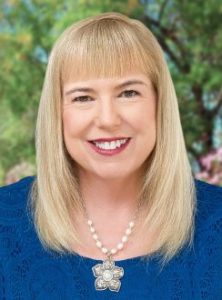
Ailene Dewar Costello, president-elect of CAHIP OC and vice president of sales, California, at Engage PEO, brings experience spanning recruitment advertising, human resources and workers’ compensation managed care. Her focus is helping brokers address employers’ needs while remaining their trusted advisor.
This article draws from a recorded conversation between Costello and California Broker CEO Phil Calhoun. Their discussion explores PEO partnerships, medical underwriting and strategies for protecting broker revenue while responding to challenging California group renewals.
A partnership rather than a handoff
For brokers who have lost accounts to a professional employer organization, skepticism is understandable. Engage PEO’s broker-referral model addresses that concern with specific protections for the broker’s relationship and compensation.
“Broker partnerships are central to how Engage does business. We help brokers bring more solutions to their clients while protecting the relationships they’ve built,” said Costello.
Engage pays referral commissions for as long as referred clients remain with the company, subject to the broker agreement. According to Costello, compensation can also apply when a client keeps broker-placed medical coverage outside Engage’s master plan.
Engage does not accept broker-of-record changes after the sale or offer competing products without the broker’s consent. Those commitments help brokers evaluate a PEO referral while protecting their client relationships and ongoing commissions.
“You can trust that your business is safe with us.”
Expanding the broker’s role
Engage provides HR consulting, payroll and tax administration, employee benefits, workers’ compensation, risk management and HR technology. Its service team includes experienced HR, payroll, benefits and risk professionals, with licensed employment attorneys serving as HR Consultants.
That gives brokers a reason to engage clients between renewals. An employer expanding into another state, struggling with employee leave or outgrowing its payroll processes may need support beyond insurance placement. Introducing that support can deepen the broker’s advisory role and create an additional source of revenue.
Keeping options open at renewal
Costello’s central message is flexibility. Engage allows medical and workers’ compensation carve-outs, giving clients options to retain existing coverage. An employer may keep a workers’ compensation policy or captive arrangement while using Engage for payroll, benefits or other services.
Medical coverage can also move between Engage’s master plan and the brokered market as client needs change.
“We can do that back and forth year over year, depending upon what is the best fit for the client,” said Costello.
That flexibility gives brokers more options at renewal. If medical pricing becomes unfavorable, an employer may be able to change coverage while keeping its payroll, time and attendance technology, workers’ compensation and retirement plan arrangements in place.
Costello includes broker partners in annual renewals, so they remain involved in evaluating coverage and advising the employer.
Qualify the opportunity early
Not every employer will qualify for Engage’s medical offering. Costello identifies a minimum of seven participants and 10 eligible full-time employees for medical underwriting consideration.
An employer that does not qualify for Engage’s medical plan may still be a candidate for other HR service arrangements.
For businesses with common ownership, Costello says qualifying entities may be considered together. Engage should review the ownership structure and applicable requirements before a broker assumes the entities can be combined.
Separate entities may be able to maintain distinct payroll accounts while accessing information through a shared technology platform.
For brokers serving related companies, the practical starting point is documenting ownership, employee counts and payroll structure before discussing pricing.
Looking beyond the initial premium
Costello describes challenging California renewals and carrier changes as reasons to benchmark alternatives. She cautions against assuming that a PEO automatically produces a lower premium.
“Every group is individually underwritten,” she said.
That does not eliminate renewal uncertainty. Changes in health and utilization can still affect pricing.
For brokers, the implication is straightforward. Present underwriting as an evaluation, not a promise of savings. Compare the total cost and scope of the arrangement, including administrative fees, coverage, service responsibilities and the support the employer needs beyond its first year.
Matching benefits to client expectations
In California, Costello says Engage offers Aetna and Kaiser coverage, with approximately 50 plan designs. Options discussed include HMOs, EPOs, PPOs and high-deductible health plans, along with FSA and HSA services and a 401(k) retirement plan.
A master plan has boundaries. When an employer needs coverage beyond the available offering, the broker can explore a separate policy to address the gap, subject to the policy’s terms.
“The broker is able to write that policy separately and partner with me to get the best solution for the client,” she said.
That approach keeps the broker involved in identifying coverage needs and evaluating how separate policies can work with the PEO arrangement.
Preparing a productive submission
Costello recommends gathering key business and workforce information upfront to support a meaningful comparison of PEO options. This includes business ownership and entity details, employee counts, workers’ compensation classifications and annual wages by classification.
A submission also requires an employee census, covered dependent information, plan summaries and the current invoice.
Costello says referral compensation is based on employees on payroll, rather than medical enrollment alone. Brokers should review the agreement’s payment schedule, employee classifications and commission terms with Engage.
Advocacy and the next conversation
Costello’s involvement with CAHIP OC has strengthened her understanding of benefits, professional education and advocacy. She describes participating in meetings in Washington and Sacramento to communicate positions on legislation affecting brokers and their clients.
“It’s been a very empowering experience,” she said.
To explore services with Costello, use the special California Broker link accompanying this article. Bring a client’s renewal concerns, census and current coverage information to discuss medical eligibility, available carve outs and broker partnership terms.
Her objective extends beyond solving one benefits problem. As she puts it, the goal is to “give them new resources and new tools so that they’re more successful.”
“Broker partnerships are central to how Engage does business.”
– Costello
For additional information click here