COVERED CALIFORNIA SMALL BUSINESS


California Broker in Conversation with Adam Unger
Experience the Full Interview!
Adam Unger brings a strong blend of frontline sales experience, product strategy, and broker engagement to his role as deputy director of Covered California for Small Business. As a former field representative, sales and product manager, and now program leader, he has spent the past decade listening carefully to brokers, refining CCSB’s value proposition, and improving the tools that support small group business. His people-first mindset is rooted in relationship management, customer centricity, and a deep respect for the role brokers play in keeping Californians covered.
This article is adapted from a recorded conversation between Adam Unger and California Broker, focusing on CCSB’s positioning in the small group market, its roadmap, and the opportunities CCSB creates for California brokers. The discussion highlights product design, underwriting flexibility, tax credits, technology, GA partnerships, and broker support as key pillars of the CCSB strategy.
From Field Rep to Deputy Director
Unger’s career path will sound familiar to many producers. He grew up in Davis, completed his bachelor’s degree in Chico, and went straight into sales, starting in IT executive recruitment, which he calls his “smiling and dialing days.” He then moved into outside sales with a national payroll and employee benefits provider, where he learned the sales cycle, relationship management, and how to turn pointed feedback and rejection into growth, calling that experience “my grounding point… for understanding within sales what rejection looks like and being able to pick yourself back up and continue.”
In 2016, Unger joined Covered California’s field team as a broker liaison, working with top agencies and community partners throughout Northern California. He was later promoted to manage a statewide team of about ten, overseeing initiatives like the storefront program and the Help on Demand lead program, which drives individual leads directly to licensed, vetted brokers. He says during that period Covered California “really built out a robust platform and value offering for brokers,” especially around individual and family plans and lead generation.
In 2021, Unger transitioned to the small group side as sales and product manager for CCSB just as the program was implementing a new enrollment platform and technology vendor. He dove into plan designs, broker feedback, and the CCSB three-to-five-year roadmap, with a focus on technology, product set, and broker resources. In December 2025, he was promoted to deputy director for CCSB, with a core goal of continuing membership growth and enhancing both technology and market value as CCSB closed 2025 with “near 80,000 in total membership” across roughly 9,300 employer groups.
CCSB Products and Underwriting
For brokers who have not looked at CCSB recently, Unger stresses that CCSB is a three-carrier exchange designed to balance employer cost control with robust employee choice. Health carriers include Blue Shield, Sharp Health Plan in San Diego, and Kaiser. Blue Shield brings full network PPO access, including a strong out-of-state solution via the BlueCard, along with Access+ and Trio HMO networks; Sharp offers Premier and Performance HMO in San Diego; and Kaiser delivers the familiar integrated HMO model. CCSB also offers standalone dental through Delta Dental.
The CCSB model centers on defined contribution and employee choice. Employers select a reference plan within one of four metal tiers and set a defined contribution for employees and, if they wish, dependents. Employees can then choose among any of the three carriers within that framework, which Unger describes as “cost containment, that cost control at the employer level, while also offering employee choice.” This structure is especially attractive when employees want to stay with a preferred carrier such as Kaiser or when employers are managing dispersed telework staff that require PPO access outside California.
On underwriting, CCSB is intentionally more flexible than many direct carrier offerings, giving brokers a landing spot for groups that struggle with participation. Unger notes that “participation with CCSB is fairly relaxed,” requiring only 70% of employees to have valid coverage across CCSB, Covered California individual plans, Medi-Cal, or other acceptable coverage, backed by waivers for the remainder. CCSB will enroll down to one employee as long as there is at least one W-2 employee, so husband-and-wife only groups do not qualify. For brokers, this can be a practical alternative when they are “attempting to enroll with various carriers and they’re not meeting underwriting” and still want a mainstream, fully insured small group solution rather than level-funded or self-funded options.
One of the most underused opportunities Unger highlights is the federal small employer tax credit available only through CCSB for qualifying groups.
Tax Credits, Ideal Employers, and Product Mix
Employers with 25 or fewer employees may qualify if their average wages meet the salary threshold, which for 2026 is $67,000. When average pay is below that level, a sliding scale federal tax credit can apply to the employer’s share of premium, with a maximum benefit of up to 50%. “That runs for two consecutive years,” he explains, so an employer that takes the credit in 2026 can also use it in 2027 before aging out of the program.
CCSB’s book of business spans a wide range of industries, but Unger points to several strong segments. He cites high tech and business services, including computer programming and software companies, as key sectors. Health services such as small practitioners and many dental offices are also prominent, along with restaurants and other eating and drinking places. The average group size is about six employees at enrollment, growing to around eight over the life of the group, which positions CCSB at the lower end of the small employer spectrum and makes it especially appealing to employers who “don’t want to necessarily take on the risk to be in a level-funded plan, or self-funded plan.”
On plan design trends, CCSB does offer an HSA-compatible high-deductible plan through Kaiser, Blue Shield, and Sharp, but appetite is strongest in richer designs. “Platinum and gold would be the top and bronze being kind of the distant fourth,” Unger notes, with relatively stable employer contributions at both employee and dependent levels. Looking at 2024 and 2025, CCSB has not seen widespread movement toward shifting cost to employees via lower metal tiers or reduced contributions, reflecting employers’ recognition that benefits are central to retention and recruitment.
Technology, GA Partnerships, and Broker Support
As Deputy Director, Unger is particularly focused on technology enhancements that reduce friction for brokers, general agents, and benefits administration platforms. A key goal for 2026 is the introduction of API connectivity with top partners, including agencies, GAs, and platforms like Ease and Employee Navigator. Today, those systems use their own interface, but data still must be manually keyed into CCSB’s portal, which introduces inefficiency and the potential for errors; bridging that gap is, in his words, “the business case that we’re solving for.”
Distribution remains dominated by the broker channel, with “90% of our business” coming through insurance brokers and about 65% of groups attached to a GA relationship. CCSB contracts with seven general agents statewide and maintains close working partnerships with them, seeing GAs as primary distribution partners that will benefit from cleaner data exchange and more seamless transactions. For newer brokers entering the group space or coming from the individual exchange, CCSB has a dedicated inside and outside sales team with regional sales executives across the state who support case design, enrollment mechanics, underwriting, and renewals.
Unger notes that many new CCSB brokers come from the individual exchange side and already understand Covered California’s broker support structure, including the broker service center. That familiarity makes it easier to “translate that into CCSB” as they start placing groups, with the same service center able to orient them to CCSB resources and route them to the right team members. Looking forward, Unger is focused on membership growth and greater synergy between the individual exchange and CCSB as enhanced individual premium tax credits are reduced and more sole proprietors grow into small employers. CCSB aims to “leverage the two exchanges and build a conduit so there’s continuity of care” and ensure members remain covered whether they are in individual and family plans or CCSB.
Visit CoveredCA.com/forSmallBusiness or call 844-332-8384 to get started.
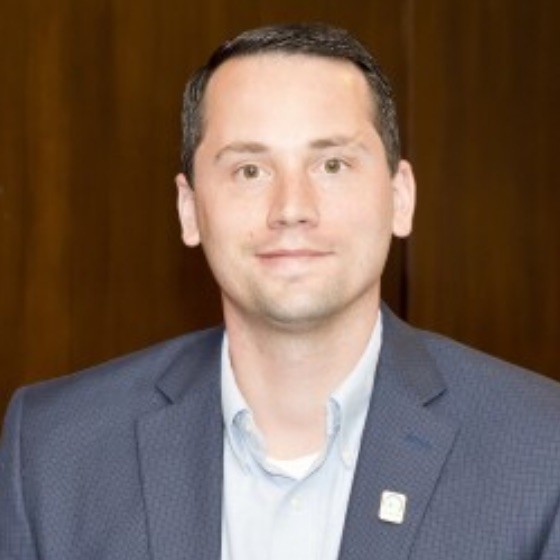
Adam Unger is the new Deputy Director for Covered California for Small Business (CCSB) as of December 2025. He previously served as Sales and Product Manager for the program since 2021. Prior to entering the small group space, Adam led Covered California’s Statewide Field team dedicated to supporting top statewide insurance agencies and distribution partners within the Individual and Family plan marketplace since 2016. He is intently focused on creating a positive customer experience for Covered California’s members and implementing resources that allow channel partners to be most successful.