
HEALTH & WELLNESS
By Megan Wroe
The holidays are coming, and your gut may already know it. You’re looking forward to seeing family, planning menus, coordinating travel, figuring out who’s bringing what and wondering how you’re going to fit everything into an already busy schedule. There’s excitement, anticipation, maybe a little anxiety and possibly some family dynamics that require their own special kind of preparation, which may be giving you anticipatory tummy angst, and you haven’t even eaten yet!
We tend to associate holiday digestive problems with what we eat: too much food, too many sweets, the rich sauces, the extra helpings. Some of this is true, but what if some of what we’re feeling in our gut has less to do with the food on our plates and more to do with everything happening around them? Understanding the powerful connection between our minds and our guts may help you to tailor your approach to gut health this holiday season.
Your gut has a mind of its own
Have you ever experienced butterflies before giving a presentation? Lost your appetite when you’re worried? Or suddenly needed to find a bathroom before an important event? We tend to think stress happens in our heads, but our guts would beg to differ. The digestive tract contains an extensive network of nerve cells called the enteric nervous system, sometimes referred to as our “second brain.” This incredible system helps regulate digestion, from the movement of food through our gastrointestinal tract, to the absorption (or perhaps elimination) of nutrients.
Our second brain also communicates with our central nervous system through what’s known as the gut-brain axis. Think of this axis as a two-way communication highway made up of hormones, immune signals and microbe-produced neurotransmitters. These communicators influence digestion, hunger and fullness sensations and general feelings, from discomfort and anxiety to joy and elation.
Your gut doesn’t know if it’s a happy holiday
We often think of stress as something negative, but stress also comes alongside experiences we’re genuinely excited about, such as holiday planning. Researchers sometimes distinguish between eustress (aka positive stress) and distress (aka negative stress). Although these experiences can feel very different emotionally in our minds, both types of stress involve physiological arousal. Depending on the intensity, duration, and individual response, that arousal can influence digestion and for many people, this means changes in appetite, intestinal movement or food sensitivity.
What this all means is that your holiday planning, and the emotions it brings along with it, may cause your digestive system respond to Thanksgiving dinner before it ever gets a chance to actually eat! Recognizing this connection provides an opportunity to approach holiday well-being proactively. Instead of trying to eliminate every stressful moment, we can create small opportunities for stress (and gut!) resiliency.
Here are some of my favorite habits to help cushion the added stress of the holiday season:
Leave breathing room between commitments. If there are non-negotiable events I have to attend on the same day, I make sure I have at least 30 minutes in between to be alone in quiet, even if that means sitting in my car. This helps regulate the nervous system.
Give thanks before a meal. Whether it’s homemade, at a party or at a drive thru, I pause before a meal to consider what that meal is doing for my body and give thanks for it. This works extra well when that meal is not nourishing because it helps you make proactive health decisions for your body.
Protect sleep. Sleep gets priority during the holidays, meaning sometimes less TV than usual or saying no to late night commitments so that bedtime is a must.
Find the joy. Whether it’s written in a journal, typed into the notes app on a phone or told verbally to a friend, recognize the joy that came into your day each day. This is especially useful at the end of the day to alleviate any negative stress that accrued.
Digestion begins before the first bite
If you’ve ever attended one of my classes, you’ve probably heard about one of my favorite digestion factoids: cephalic digestion. Cephalic digestion is the first phase of digestion and it starts before anything reaches your stomach. The sight, smell, taste and anticipation of food initiates digestive processes that help us better digest and absorb the food we are about to eat. Try this: close your eyes and imagine biting into a lemon. Did your mouth just purse together and create saliva? Without any lemon in sight!? That’s some powerful gut-brain connectivity don’t you think? Now compare that experience with the way many of us eat on an ordinary day: breakfast in the car, lunch we did not see or smell being prepared while answering emails, dinner plucked from the freezer and into the microwave while scrolling through our phones. That disconnect removes an entire phase of digestion which can end up in symptoms such as bloating or continued hunger pangs.
While I would love if all my readers see this and immediately start cooking all their meals, that isn’t realistic. But there is a trick you can use.
Here’s the hack: Slow Down and Notice Your Food. Look at it before you take a bite, visualize how it got there and what it smelled like while cooking, sniff it, visualize that first bite. I guarantee this will kickstart your cephalic digestive phase and help your digestion work more effectively. Take your time during the entire meal, chewing slowly and noticing your bites.
“If you ever want to track something for your health, start with fiber intake”
Feed your gut, not your guilt
While stress resilience is a huge component of gut health, of course what we eat matters. Our gut is home to trillions of microorganisms that you may know as probiotics—certain fibers in plant foods that are fermented by gut microbes. They produce compounds called short-chain fatty acids (aka postbiotics), which support intestinal health and participate in immune and metabolic signaling. What this means is that to create a healthy microbial environment, we need to eat lots of fiber. Thirty grams per day or more to be exact, which is approximately five cups daily of plant foods. If you ever want to track something for your health, start with fiber intake.
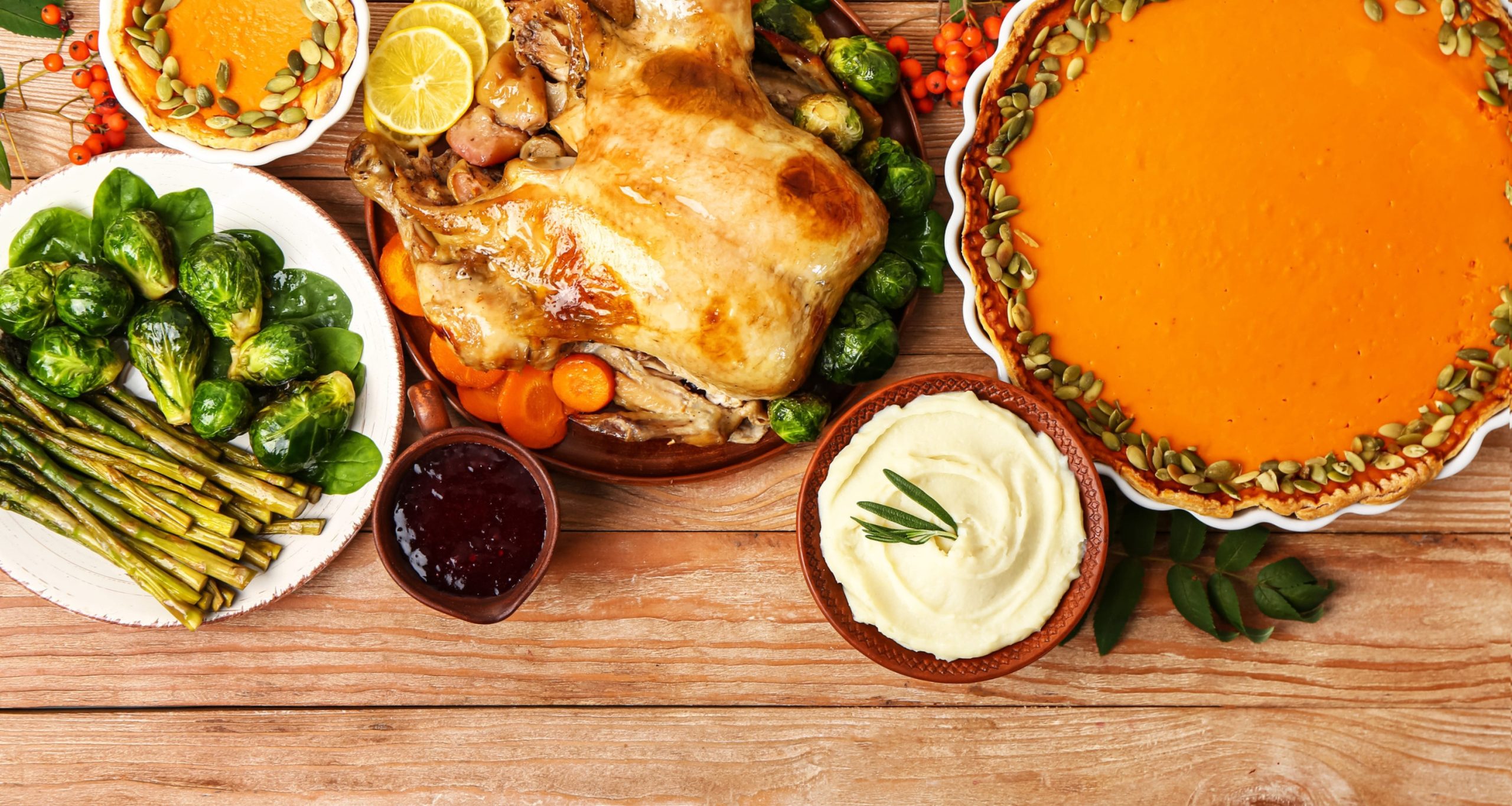
Traditional holiday meals already contain plenty of plant foods that support gut health. Think sweet potatoes, cranberries, pumpkin, Brussels sprouts, green beans, apples, pecans, wild rice, herbs, garlic and onion! Rather than focusing on which holiday foods to eliminate, consider how many different plants you can include. You could even make a game of it: How many plant foods can your family identify on the Thanksgiving table? Don’t forget that herbs, spices, nuts and seeds count. Call it Holiday Plant Bingo. I know most of you are rolling your eyes at this crazy dietitian, but now at least you’ll be playing the game in your head!
Holidays are for celebrating, and with that comes special food. So please don’t skip grandma’s famous stuffing or feel guilty about a big slice of pumpkin pie. One holiday meal doesn’t define your gut health any more than one salad does.
Your tummy toolbox
We have a habit in our society of dividing wellness into separate categories. Nutrition is about food, stress management is about meditation, gut health is about probiotics, strength is about going to the gym. Our bodies don’t recognize those departmental boundaries, however. Our gut, brain, nervous system, immune system, emotions and daily behaviors are constantly interacting and are doing so whether or not it’s a holiday season.
Supporting digestive health means considering your whole person. This means your digestive needs may change in different seasons or on different days, and is the reason having a toolbox of tummy tools to choose from (that are not all food-based) is the most effective strategy. Try new tummy tools regularly, rotate through them when one doesn’t seem to be working, and recognize that in certain seasons you may need to use multiple tools at once to feel gut relief.
Tummy Toolbox:
Aim to eat five cups of plant foods daily
If you can’t eat five daily cups of plant foods consistently, consider a psyllium or acacia fiber supplement
Take a moment before you eat to recognize as many sensations about the food as you can. Visualize how it will taste before eating it if you were not a part of the cooking process
Move after you eat for 10-15 minutes
Allow for space and time in between commitments
Recognize the joy in your day every day without fail
Practice stress relieving activities as often as you can
Prioritize sleep
Notice how food and celebrations make your body and mind feel
Happy holiday season my friends!
Upcoming programs at St. Jude Wellness Center
Cancer Wellness Program: A 4-month program for new cancer survivors designed to re-condition the body through movement, strength, education and connection. This philanthropy-funded program is free to participants referred from their physician. Contact St. Jude Wellness Center for more information.
Brain Fit: Our signature brain gym circuit course focused on utilizing dual-tasking exercises for enhancing neuroplasticity and reducing risk of cognitive decline. This course is for active, independent agers who are not currently managing cognitive conditions. Brain Fit is a twice weekly, 6- week series offered consistently throughout the year for $185.
Parkinson’s Empowerment Program: An early intervention program for those with recent PD diagnoses and their care partners. This 4-week program combines education from an integrative team of health and wellness experts along with caregiver support and PD exercise. Participants receive personalized recommendations for next best fitness program. Cohorts are free of charge and offered every 1-2 months. Support groups also now available for PD and caregivers.
Wellness Center Tours: For those new to our center, we offer bimonthly tours free of charge to give you the behind the scenes scoop of what we offer for you.
Senior Social Groups: A free monthly group intended to bring people together and encourage socialization. Volunteers lead these sessions with topics ranging from arts & crafts to games to engaging discussions.
Guided Meditation, Breath Work and Yoga Workshops:
$25 each, offered monthly
Yoga for Back Health Series: start in October, $65
Strength in Motion Series: starts in October, $165
Sound Bath: $25 per session, offered 2-3 times per month
Lifestyle Health Webinars & Virtual Cooking Classes:
free every month
Nov. 5: A Healthy Gut for the Holidays, Nov. 13: Gut Focused Food & Flow, Nov. 20: Gratitude Yoga Flow, Dec. 2: Virtual Cooking Class, Dec. 15: Sleep Well Webinar